
Rope Care
Rope Care and Storage for Ranch Work and Team Roping
How should you store and carry your ropes? Keep them dry, coiled, shaded and away from heat and chemicals, protect them on the road, and check them regularly. These general care habits support ranch work and team roping.
Precision Ropes • 2 min read
The short answer
Most rope care comes down to a few habits: store ropes dry and loosely coiled, keep them out of sun and heat, keep them away from fuel and chemicals, protect them when you travel, and look them over often. The guidance below is general good practice for nylon and nylon/poly ropes, not a set of Precision specific procedures.
Materials and model-specific care
Combat 4 is 100% nylon. Amazon 4, Finish Him 4, Six Seals 6 and Amazon 6 are nylon/poly; Patriota 4 is a nylon/poly blend. White, Green, Orange and Gray full coils are treated and lead free.
Care needs can vary by material and construction. For model-specific care questions, ask your retailer or contact our team.
Storage at home or in the barn
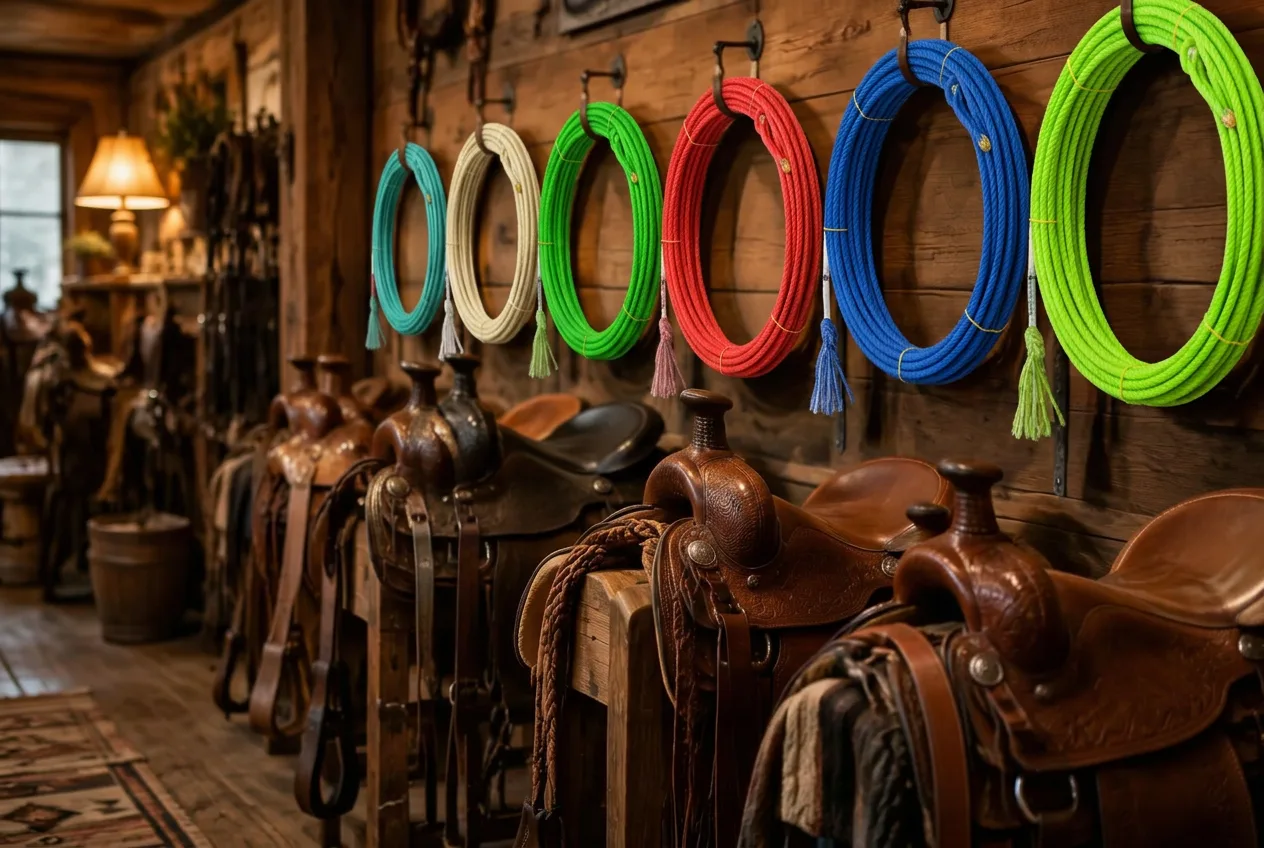
Store ropes in a dry place with air around them, off the floor and out of direct sun.
Keep them away from heaters, engines, welding areas and other heat sources.
Keep them away from fuel, oil, fertilizer, batteries and cleaning chemicals.
Coil them loosely in their natural direction instead of forcing a tight coil.
Many ropers keep ropes in a rope bag or can to protect them from dust and keep their shape.
Weather and moisture
Rope feel can change with heat, cold and humidity, which is one reason team ropers often keep ropes in more than one lay. If a rope gets wet, let it dry naturally in the shade, loosely coiled, before you store it. Avoid drying a rope next to a heater or in a hot vehicle.
Transport
A truck cab or trailer tack room can get very hot in summer. Use a rope bag or can, keep ropes off hot floors and away from fuel cans, and avoid leaving them on the dash or in direct sun. Don't let ropes ride under heavy gear that can crush or kink them.
At the arena and on the ranch
Keep ropes off the ground between runs or jobs where you can, since dirt and grit work into the strands and add abrasion. Coil the rope back up after use rather than leaving it in a pile, and keep it clear of hooves, fences and trailer edges.
Regular checks
Care and inspection go together. Each time you put a rope away, run it through your hands and look at the honda, the dally area and the tail. Our guide to inspecting rope wear explains what to look for, from abrasion and glazing to changes in feel.
General guidance vs. brand advice
Rope makers use different materials and processes, and some publish their own treatments or routines. Those instructions apply to their products. Unless a procedure comes from Precision for a Precision rope, treat it as another brand's advice, not as guidance for your Precision rope.
Shop and stock
Browse Precision team ropes, ranch ropes and full coils to compare materials and constructions. Retailers interested in carrying the line can contact us through the wholesale page.